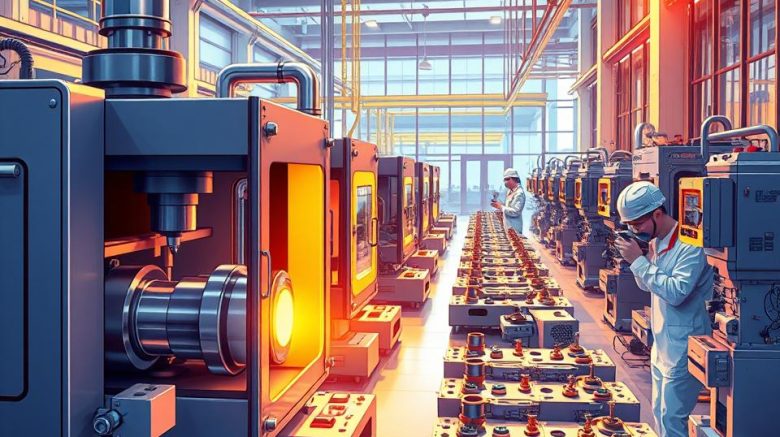
Singapore Metal Injection Molding: Quality-Focused Solutions
Singapore stands as a global leader for advanced manufacturing and precision engineering. A strong infrastructure and skilled talent pool position it as a prime hub for innovation. Firms such as AMT have flourished here, providing cutting-edge services for 30+ years.
AMT focuses on metal injection molding (MIM), supplying high-quality, complex parts at scale. Through an integrated https://amt-mat.com/business/mim/metal-injection-molding/ approach spanning tooling to assembly, they ensure streamlined global supply chains.
Backed by certifications and strict quality standards, AMT has earned a reputation for reliability. A global clientele spans sectors ranging from automotive to medical devices. Singapore’s supportive ecosystem and AMT’s technical expertise underpin this success.
Key Takeaways
- Singapore is a hub for advanced manufacturing and precision engineering
- AMT has led MIM solutions for over 30 years
- Integrated operations help maintain efficient supply chains
- Credibility is reinforced by certifications and quality controls
- A skilled workforce in Singapore benefits global clientele
Introducing Metal Injection Molding in Singapore
Singapore’s manufacturing landscape thrives on innovation and precision. AMT and similar companies have propelled metal injection molding (MIM) forward. Since 1990, AMT has become a leader, delivering end-to-end solutions that combine MIM, precision tooling, CNC machining, and 3D printing.
Singapore’s strategic location enhances its global distribution capabilities. Thanks to this, AMT efficiently serves clients in medical, automotive, electronics, and industrial sectors. Addressing fragmented supply chain challenges, AMT ensures seamless production and delivery of high-quality components.
MIM process steps combine fine metal powders with binders to form intricate parts. AMT’s expertise plus Singapore’s infrastructure position the company as a trusted partner for complex manufacturing. Their commitment to innovation and quality continues to drive success in a competitive global market.
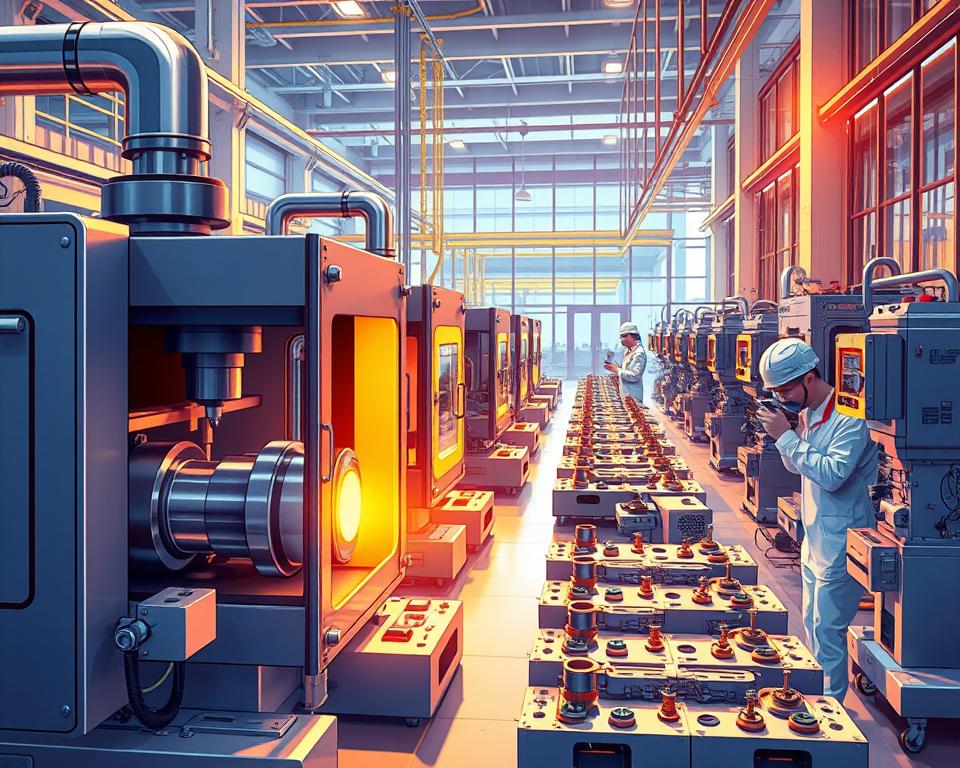
Metal Injection Molding (MIM): What It Is
MIM is a cutting-edge manufacturing method combining precision with efficiency. This method produces complex, high-performance components with tight tolerances. Industries such as automotive, medical, and electronics widely use this method.
The MIM Process Explained
The mim process involves four key steps: mixing, injection, debinding, and sintering. First, binders and fine metal powders are mixed to form a feedstock. Next, the mixture is injected to produce a green part with the final geometry.
Afterward, the green part is debound to remove binders, yielding a brown part. Finally, the brown part is sintered at high temperatures to achieve its final density and strength. Around 15% shrinkage occurs during sintering, yielding a net-shape component with precision.
MIM’s Key Building Blocks
Several critical components ensure quality throughout the mim process. Custom feedstock formulations match specific alloys, enabling material flexibility. The green part and brown part stages are essential for achieving the desired density and shape.
Final sintering is key to final durability and strength. Unlike traditional machining or plastic injection molding, MIM produces parts with intricate geometries and high material efficiency. Therefore it’s preferred for industries demanding precision and performance.
Advantages of Metal Injection Molding
Advanced methods now enable complex components with outstanding accuracy. Notably, AMT delivers advantages like high precision, flexible materials, and strong performance. These advantages make it the choice for industries needing intricate, durable parts.
Dimensional Accuracy and Tolerances
Tolerances down to ±0.3% help ensure exact specifications. With finishes under 32 µin Ra, extra polishing is often unnecessary. Thin-wall capability to 0.2mm lets AMT create intricate designs featuring complex geometry.
Versatile Materials and Strength
From stainless steel (for corrosion resistance) to dense tungsten alloys, material choices are broad. AMT’s In-Coring® and bi-material integration further enhance functionality by reducing part size and weight. Versatility supports tailored solutions spanning medical devices to automotive components.
Cost savings are another significant advantage. By minimizing secondary machining and assembly, production is streamlined. Medical devices that require biocompatible, sterilizable parts exemplify these efficiencies. The blend of high strength, precision, and flexibility makes it transformative for modern manufacturing.
Applications & Use Cases of MIM
Advanced manufacturing’s versatility enables highly specialized components across sectors. From medical devices to automotive systems, these methods deliver precision and reliability. Companies like AMT leverage this technology to produce critical parts that meet stringent industry standards.
Healthcare and Surgical Applications
Medical applications demand top precision. AMT delivers stainless steel endoscopic graspers and robotic tools that meet strict biocompatibility standards. These components are essential for minimally invasive procedures, ensuring patient safety and operational efficiency.
Additional medical applications include MRI parts and disposable instruments. These items require high strength and sterilization capabilities, making them ideal for this manufacturing process. With tungsten alloys, AMT enables imaging-device shielding, highlighting the technology’s adaptability.
Automotive and Industrial Components
Automotive applications benefit from precise, durable parts such as fuel injectors and sensor housings. These components enhance vehicle performance and reliability. Producing transmission gears and seatbelt mechanisms, AMT highlights suitability for high-stress environments.
In industrial settings, high-pressure valves and wear-resistant automation parts are critical. These items ensure smooth operations in demanding conditions. The ability to produce complex geometries with tight tolerances makes this method a preferred choice for industrial applications.
| Sector | Use Cases |
|---|---|
| Medical | Endoscopic graspers, MRI components, robotic surgical tools |
| Auto | Sensor housings, fuel injectors, transmission gears |
| Manufacturing | High-pressure valves, wear-resistant automation parts |
| Consumer Electronics | 5G heat sinks, smartphone hinges |
From medical advancements to automotive innovations, the applications of this technology are vast. Its ability to produce high-quality, intricate parts ensures its relevance across diverse industries. AMT’s commitment to excellence continues to drive its success in delivering tailored solutions worldwide.
Why MIM in Singapore Makes Sense
Singapore’s advanced manufacturing provides unmatched solutions for global industries. The city-state’s strong infrastructure and skilled talent create a hub for precision engineering and innovative production. AMT leverages these advantages to deliver high-quality outcomes.
Singapore’s strong IP protection laws ensure the security of proprietary designs and processes. Compliance with FDA and ISO 13485 further enhances AMT’s credibility, making it trusted in medical devices and automotive.
Advantages include English-speaking engineers, rapid turnaround, and https://amt-mat.com/business/mim/ access to a busy global port. Such factors streamline logistics and help ensure on-time delivery of components globally.
AMT’s co-development process optimizes part geometry and material selection, ensuring efficiency and cost-effectiveness. Their ISO-certified facility also offers design-for-MIM support and rapid prototyping, reducing time-to-market for clients.
Quality assurance is a top priority at AMT. Their in-house testing labs ensure every component meets stringent standards before delivery. This commitment to excellence has earned AMT a reputation for reliability and precision.
For consultations, reach AMT at +65 6865 5700 or 5700 email. The team stands ready to assist with tailored manufacturing solutions.
Materials Used in Metal Injection Molding
Choosing the right materials is critical for precision and durability in manufacturing. To meet diverse needs, AMT uses a wide range of ferrous and non-ferrous alloys. Such materials help components perform reliably in demanding environments.
Ferrous and Non-Ferrous Alloys
Ferrous alloys, such as 17-4 PH stainless steel, offer exceptional strength with tensile capabilities up to 1400 MPa. Soft magnetic alloys are also widely used for their unique properties. Non-ferrous choices include MP35N for MRI safety and tungsten-copper for thermal management.
AMT also works with advanced alloys, including F75 cobalt-chrome (implants) and Inconel 718 (aerospace). These alloys provide corrosion resistance and high-temperature stability, making them ideal for critical components.
Custom Feedstock Solutions
Custom materials are tuned for specific applications. Tungsten content (90–92.5%) is tuned for radiation shielding as needed. For surgical tools and medical devices, biocompatible options like nickel-free stainless steel are essential.
Traceability and quality are ensured by AMT’s testing protocols. Each batch undergoes rigorous checks to meet standards. Such commitment guarantees reliable components.
| Alloy Class | Example Applications |
|---|---|
| Iron-Based Alloys | 17-4 PH stainless, soft magnetic alloys |
| Non-Ferrous | MP35N, tungsten-copper, F75 cobalt-chrome |
| Customised Blends | Tungsten-adjusted blends, nickel-free stainless steel |
What’s Next for Metal Injection Molding
New trends in advanced production are redefining standards. AMT leads by integrating mim technology with 3D printing and AI-based optimization. Innovations like these enable smarter and more efficient manufacturing solutions.
Key trends include miniaturization in medical technology and lightweighting in automotive design. AMT’s R&D efforts focus on nano-powders, enabling finer features and faster sintering. Sustainability remains a priority: binder recycling and energy-efficient debinding lower environmental impact.
Digital twins are transforming quality monitoring. Creating virtual component replicas enables real-time defect detection, increasing precision and reliability. This approach is particularly valuable for industries like 5G infrastructure and electric vehicle (EV) components, where demand is rapidly increasing.
As industries evolve, the adoption of mim technology is expected to grow. Because it produces complex, high-performance parts with unmatched precision, it’s vital for future production. AMT’s innovation focus ensures continued trust in a dynamic landscape.
Conclusion
For 30+ years, AMT has provided trusted precision manufacturing solutions. End-to-end capabilities and material innovation have helped set benchmarks for quality and reliability.
Using Singapore’s strong ecosystem, AMT delivers seamless production and on-time delivery. They are a preferred partner worldwide, with expertise from medical devices to automotive components.
For enquiries, reach AMT at +65 6865 5700 or 5700 email. Quick-response prototyping supports time-sensitive projects, ensuring efficient fulfilment.
AMT remains committed to customer-centric partnerships and unmatched quality. Trust them to deliver tailored solutions that drive your success.